MAY | MILITARY APPRECIATION MONTH

Military Appreciation Month
MILITARY APPRECIATION MONTH — MAY 2024
May, marked officially as Military Appreciation Month, is a special month for both those in and out of the military.
Not only do we pause on Memorial Day to remember the sacrifice and service of those who gave all, but the month also holds several other military anniversaries and events, including Military Spouse Appreciation Day and Armed Forces day.

May 1 – Loyalty Day
A day set aside for American citizens to reaffirm their loyalty to the United States
and to recognize the heritage of American freedom. Learn more…
May 1 – Silver Star Service Banner Day
A day set aside to honor our wounded, ill, and dying military personnel by
participating in flying a Silver Star Banner. Learn more…
May 2 – National Day of Prayer
The National Day of Prayer is an annual observance held on the first Thursday of
May, inviting people of all faiths to pray for the nation. Learn more…
How can you pray for the military community? Learn more…
May 8 – VE (Victory in Europe) Day
(Celebrated May 7 in commonwealth countries)
A day which marks the anniversary of the Allies’ victory in Europe during World War II
on May 8, 1945. Learn more…
May 10 – Military Spouse Appreciation Day
A day set aside to acknowledge the contributions and sacrifices of the spouses of
the U.S. Armed Forces. Learn more…
LINK – Practical insights in caring for a military home front family
May 12 – Mother’s Day
LINK – Organizations that support deployed military personnel on Mother’s Day
LINK – Coloring page for military children

May 13 – Children of Fallen Patriots Day
A day to honor the families our Fallen Heroes have left behind – especially their children. It’s a reminder to the community that we have an obligation to support the families of our Fallen Patriots. Learn more…
May 18 – Armed Forces Day
A day set aside to pay tribute to men and women who serve in the United States’
Armed Forces. Learn more…

May 27 – Memorial Day (Decoration Day)
A day set aside to commemorate all who have died in military service for the United States. Typically recognized by parades, visiting memorials and cemeteries. Learn more…
LINK – Coloring page for military children
History of Sorts blogger, Dirk Dirklein, has posted a magnificent poem for 4 May…
https://wordpress.com/read/feeds/50862033/posts/5223452622
GP is sorry to be late in posting this.
March 13 – is National K-9 Veterans Day – they are not forgotten!!
##############################################################################
Military Humor –


############################################################################
Farewell Salutes –
Henry Cervantes (100) – Fresno, CA; US Army Air Corps, WWII, Fighter pilot, 100th Bomb Group
J. Gary Cooper – Mobile, AL; USMC; Vietnam, Bronze Star, Purple Heart, DSM, MGeneral (Ret. 38 y.) /AL House of Representatives / Asst. Secretary of the Air Force under Bush/ Ambassador to Jamaica under Clinton
Lyndon J. Cosgriff-Flax – Wichita, KS; US Navy, Petty Officer 3rd Class, Yorktown Naval Weapons Station, DWS
David H. Frank – Colorado Springs, CO; US Air Force, Lt. Col. (Ret. 21 y.), pilot/ Norad
Bill Gladden (100) – London, ENG; British Army, WWII, 6th Airborne Recon Regiment
Ella “Peg” Lawrence (102) – Cincinnati, OH; US Army Air Corps WAC, WWII, Squadron Commander
Tracy M. Niksich – San Diego, CA; USMC, Vietnam, Desert Shield/Desert Storm, CWO-4 (Ret. 22 y.)
Zenon Pawlykowych – Chicago, IL; USMC, Vietnam
Hal Simons – San Diego, CA; US Navy, Korea, aviation radar / USS Midway Museum volunteer
Gary W. Trople – Bozeman, MT; USMC, Vietnam
##############################################################################

##############################################################################
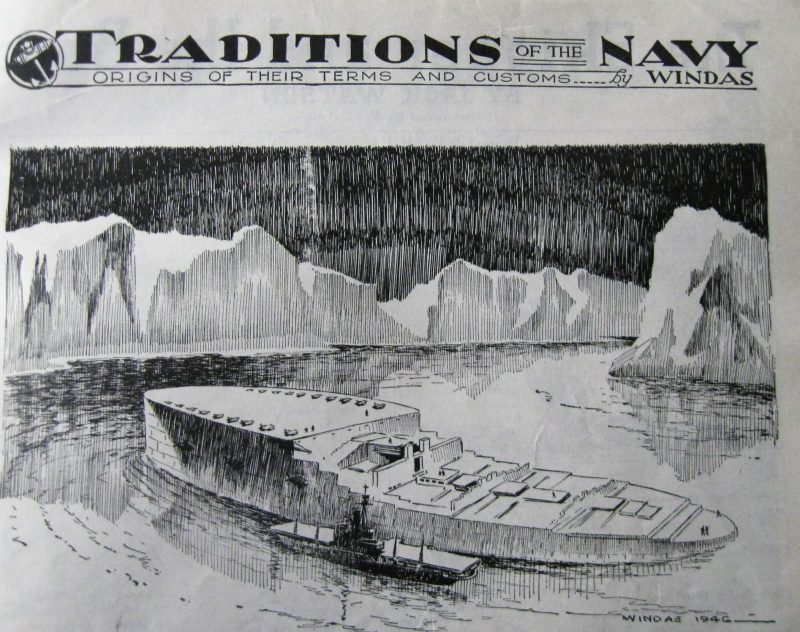
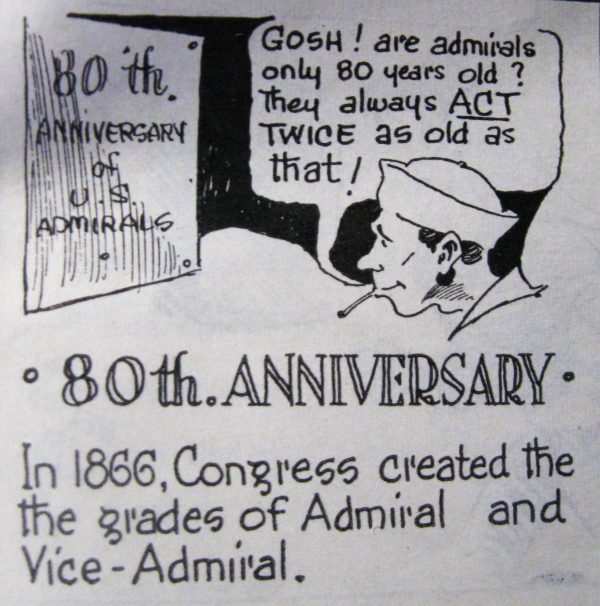
Naval Tradition @ 1946
With sincere thanks to Jeanne, this post shows what “OUR NAVY’ magazine included as U.S. Naval tradition and humor in their September and December 1946 issues.



#############################################################################
Military Humor –
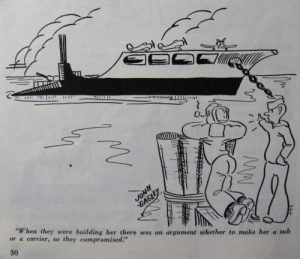
“When they were building her, there was an argument whether to make her a sub or a carrier, so they compromised.”


“Three battleships on my chest, please.”
#############################################################################
Farewell Salutes –
Nancy Cox Allen (100) – Mansfield, OH; US Navy WAVES, WWII, Yeoman 2nd Class

US Flag at Half-staff, courtesy of Dan Antion
Colin Arslanbas – MO; USMC, SGT., Maritime Special Purpose Force/24th Expeditionary Unit, KWS (Camp Lejeune)
Raymond Casatelli (100) – Utica, NY; US Army, WWII, ETO
Austin Dishmon – Lancaster, CA; US Army, Lithuania, 3rd Infantry Division, KWS
David H. Frank – Colorado Springs, CO; US Air Force, 694 Security Squadron, recon C-130 pilot / Norad, Space Commander, Lt. Colonel (Ret.)
Marcus Jordon – Jacksonville, FL; US Air Force, Senior Airman, 38th Rescue Squadron, KWS (Guam)
Gerald L. Lester – Port Angeles, WA; USMC, Vietnam, Sgt. Major, Purple Heart
Miguel Maya – TX; USMC, Cpl., Avionics technicin, Marine Helicopter Light Attack Training Sq. 303, KWS (Camp Pendleton)
Carl E. Patterson – Falls Church, VA; US Aarmy Air Corps, WWII, B-24 & B-26 pilot / Korea, Air Force Audit Agency / Vietnam, Colonel (Ret. 30 y.)
James L. Shaw – Maplewood, MN; US Army, Sgt. Major
Gary W. Trople – Bozeman, MT; USMC, Vietnam
############################################################################
#############################################################################
History and the 11th Airborne Division


1946 outlook for the U.S. Navy
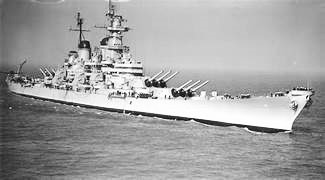
USS Iowa (BB-61), 1946
Charles M. Hatcher, of “Our Navy magazine, September 1946, after reading about the 2 bomb explosions on Bikini Atoll, came across the discussion as to whether those tests proved to render navies obsolete. Here is an excerpt from that article, written in September 1946. Do you feel it still applies today?
The battleship was obsolescent long before the A-bomb, proven so by Billy Mitchell on the Atlantic Coast, Taranto, Pearl Harbor and Malaya merely lent emphasis to the knowledge and belief of airmen that airborne bombs and torpedoes would and could sink any ships built.
The US Navy tacitly recognized the departure of Line-of-battle tactics when it brilliantly organized its task forces, train-fleets and amphibious assault groups.
That it was taken by the scruff of the neck and damn well forced to do some brilliant improvising when the battle fleet was blotted out at Pearl. But that the US Navy high command did come up with some tremendous ideas, the recently won global war will attest. And that this same leadership might reasonably be expected to be alert to continuing new ideas, tactics and strategy should seem logical to any by the blindly partisan or the uninformed.

LST-731
The US Navy needs to worry about John Q. Uninformed. Assailed by enough propaganda and blinded by continuous smoke clouds of half truth, the general public may in time forget the concrete exploits which won the Pacific War and made the European campaigns possible.
He may consent to a drying up of funds for experiment, practice and construction – as happened after the first World War. And then he’ll wonder what hit him when a catastrophic emergency explodes all over an undertrained, under-built and under-researched fighting outfit.
We can count on this: if there is a U.S. Navy in the future, it will be largely an aviation Navy plus submarines.
Obviously, it’s the job of every man in this outfit, seaman deuce on up, to start worrying about his Navy if he believes in anything… Volunteering as a sailor and saying to hell with whining or letters of complaint to Congressmen, then he’d better scram out. We’ve got a rugged cruise ahead.

USS Arnold J. Isbell (DD-869), 1946
The job is to learn something every day to toughen ourselves up; to develop a justified pride in our outfit, and to make ourselves the best damned fighting men in the world. He who stimulates dissatisfaction in the ship; who grumbles without constructive effort; who whines and whimpers and goldbricks – that man is the Navy’s worst enemy within.
I just got to looking around and watching the beautiful new equipment being handled by youngsters so busy complaining about personal problems, they couldn’t appreciate the swell new equipment they were getting.
BY: Charles M. Hatcher, “The Sky’s the Limit: Aviation News and Views” article in Our Navy magazine, September 1946
Courtesy of Jeanne Bryan Insalaco @https://everyonehasafamilystorytotell.wordpress.com/
##############################################################################
Military Humor –

##############################################################################
Farewell Salutes –
Albert H. Cote – Morristown, NJ; US Army, Vietnam, Colonel, (Ret.)
Richard A. Dunn – Perry, MI; US Army/US Navy, Vietnam, Captain (Ret. 35 y.), Bronze Star

US Flag at Half-staff, courtesy of Dan Antion
Herbert A. Higgins – Brooklyn, NY; US Navy, WWII
James B. McCartney – Ridgway, CO; US Army, WWII, ETO, Pvt., Co B/1/222/42 Infantry Division, KIA (Wildenguth, FRA)
Ralph Puckett – Tifton, GA; US Army, Korea & Vietnam, Colonel (Ret.), Distinquished Service Cross, Medal of Honor, 2 Silver Stars, 2 Bronze Stars, 5 Purple Hearts
Daniel L. Ruby – North Beach, WA; US Army, Vietnam
Raymond U. Schlamp – Dubuque, IA; US Army, WWII, ETO, Pfc., Co G/2/11/5th Infantry Division, KIA (Dormot, FRA)
Clifford H. Strickland – Fowler, CO; US Army, WWII, PTO, Co C/803 Engineers, POW, KIA (Cabanatuan Camp, Luzon)
Robert Thompson – Lewistown, IL; US Army Air Corps, WWII, PTO, 11th Airborne Division
Doris Eileen Zeissig (102) – Decatur, IN; US Army WAC, WWII, ETO, Nurse
##############################################################################

####################################################################################
Quotes that came out of WWII

New Guinea
True combat power is arms multiplied by fighting spirit
___ Asahi Shimbun
We were all teenagers or barely in our twenties, totally naive to the ways of the world. Our patriotic goal was to get even for Pearl Harbor. All forty-eight states were united. Aviators would be needed to defeat Japan. We were the Flyboys…
___ Pilot Lou Grab, quoted in ‘George Bush: His World War II Years’
Japanese, had failed fully to appreciate the strategic revolution brought about by the increased capabilities of air power.
___ “U.S. Strategic Bombing Survey Report” 1946
We hold his examples of atrocity screaming to the heavens while we cover up own and condone them as just retribution for his acts. We claim to be fighting for civilization, but the more I see of this war in the Pacific, the less right I think we have to claim to be civilized. In fact, I am not sure that our record in this respect stands so very much higher than the Japanese.
____ Charles Lindbergh, ‘The Wartime Journals of Charles Lindbergh’
Meet the expectations of your family and home community by making effort upon effort, always mindful of the honor of your name. If alive, do not suffer the disgrace of becoming a prisoner; in death, do not leave behind a name soiled by misdeeds.
____ “Imperial Japanese Army Field Service Code”
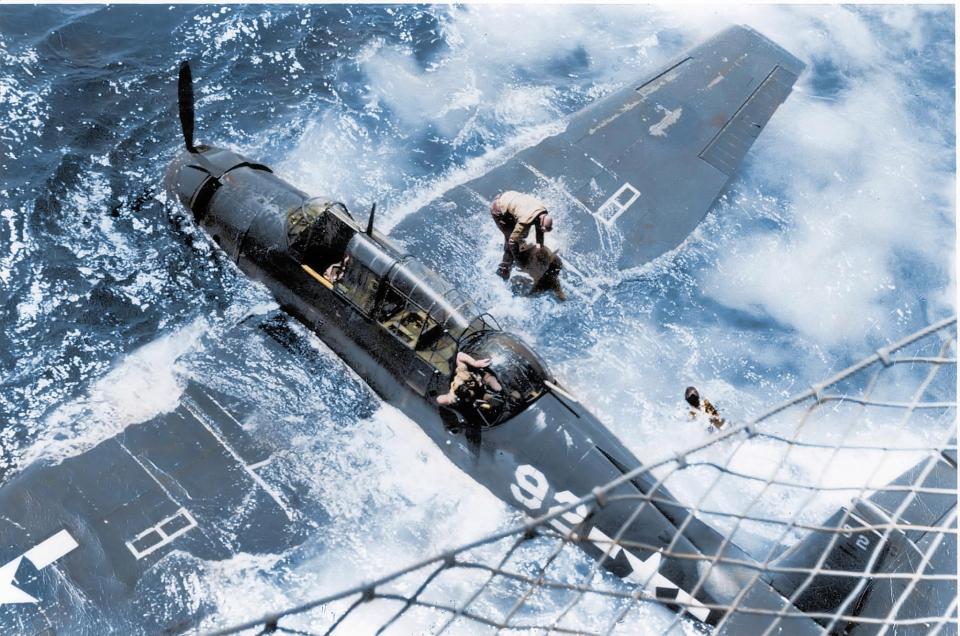
Pacific War; downed aircraft
Please try to understand this. It’s not an easy thing to hear, but please listen. There is no morality in warfare. You kill children. You kill women. You kill old men. You don’t seek them out, but they die. That’s what happens in war.
____ Paul Tibbets, quoted in “Duty: A Father, His Son, and the Man Who Won the War”
If we are prepared to sacrifice 20 million Japanese live in kamikaze effort, victory will be ours.
____ Admiral Taijiro Onishi, quoted in “Hell in the Pacific”
If I had lost the war, I would have been tried as a war criminal.
____ General Curtis LeMay, quoted in “Dark Sun: The Making of the Hydrogen Bomb”
As long as there sovereign nations possessing great power, there will be war.
____ Albert Einstein
Among the men that fought on Iwo Jima, uncommon valor was a common virtue.
____ Admiral Chester Nimitz, 16 March 1945
The Limeys want us in even with our hastily made plans and our half-trained and half-equipped troops.”
____ General Joseph Stillwell speaking about joining the war alongside Britain

Eastern Front
Nice chap, no general.
____ General Bernard Montgomery, speaking his first impression of General Eisenhower
Anyone who says they weren’t scared in combat, was either crazy or stupid.
____ Everett “Smitty” Smith, 11th Arborne Division
Old soldiers never die, they just fade away. And like the old soldier in that ballad, I now close my military career and just fade away, an old soldier who tried to do his duty as God gave him the sight to see that duty.
____ General Douglas Mac Arthur
With the development of weapons of indiscriminate mass murder and the real possibility of a nuclear holocaust, Japan’s experience of the “horrors of war” may prove a valuable lesson for other countries as well…
____ Saburo Ienaga
###############################################################################
Military Humor –


#######################################################################################
Farewell Salutes –
Frank V. Benak – Scottsville, MI; US Army, WWII, PTO, Cpl., Co C/128/32 Infantry Division, KIA (Papua, NG)
William L. Carroll – Riverside, RI; US Navy, WWII, PTO, USS St. Mary’s

Leroy C. Cloud – Taylor, TX; US Army, WWII, ETO, 744th Tanker Battalion, KIA (at sea)
Lou Conter (102) – Ojibwa, WI, US Navy, WWII, PTO, pilot “Black Cats”, USS Arizona (Last Survivor), Lt. Comdr. (Ret. 28 y.)
John O. Herrick – Emporia, KS; US Army, WWII, ETO, Sgt., Co B/149th Engineer Battalion, KIA )FRA)
Conrad J. Rioux – Hartford, CT; US Army, Korea, Capt., Medical Unit, 3rd Infantry Division, Bronze Star
Raymond U. Schlamp – Dubuque, IA; US Army, WWII, Pfc., 11/5th Infantry Division, KIA (FRA)
David Walker – Norfolk, VA; US Navy, WWII, PTO, mess attendant, USS California, KIA (Pearl Harbor, HI)
Julius G. Wolfe – Liberal, MO; US Army, WWII, ETO, Cpl., Co B/149th Engineer Combat Battalion, KIA (FRA)
#################################################################################

Did somebody say that it’s Monday?
#####################################################################################
#####################################################################################
Ode for the American Dead in Asia, by: Thomas McGrath
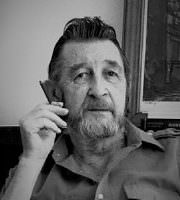
Thomas McGrath, poet
Ode for the American Dead in Asia
1.
God love you now, if no one else will ever,
Corpse in the paddy, or dead on a high hill
In the fine and ruinous summer of a war
You never wanted. All your false flags were
Of bravery and ignorance, like grade school maps:
Colors of countries you would never see—
Until that weekend in eternity
When, laughing, well armed, perfectly ready to kill
The world and your brother, the safe commanders sent
You into your future. Oh, dead on a hill,
Dead in a paddy, leeched and tumbled to
A tomb of footnotes. We mourn a changeling: you:
Handselled to poverty and drummed to war
By distinguished masters whom you never knew.
2.
The bee that spins his metal from the sun,
The shy mole drifting like a miner ghost
Through midnight earth—all happy creatures run
As strict as trains on rails the circuits of
Blind instinct. Happy in your summer follies,
You mined a culture that was mined for war:
The state to mold you, church to bless, and always
The elders to confirm you in your ignorance.
No scholar put your thinking cap on nor
Warned that in dead seas fishes died in schools
Before inventing legs to walk the land.
The rulers stuck a tennis racket in your hand,
An Ark against the flood. In time of change
Courage is not enough: the blind mole dies,
And you on your hill, who did not know the rules.
3.
Wet in the windy counties of the dawn
The lone crow skirls his draggled passage home:
And God (whose sparrows fall aslant his gaze,
Like grace or confetti) blinks and he is gone,
And you are gone. Your scarecrow valor grows
And rusts like early lilac while the rose
Blooms in Dakota and the stock exchange
Flowers. Roses, rents, all things conspire
To crown your death with wreaths of living fire.
And the public mourners come: the politic tear
Is cast in the Forum. But, in another year,
We will mourn you, whose fossil courage fills
The limestone histories: brave: ignorant: amazed:
Dead in the rice paddies, dead on the nameless hills.
From:
Selected Poems 1938-1998
##############################################################################

I HOPE VERYONE HAS HAD A BEAUTIFUL EASTER WEEK !!!!

##############################################################################
Military Humor – 

#######################################################################
Farewell Salutes –
Kenyon Brindley – Little Rock, AR; US Army Air Corps, WWII, ETO, B-24 bombardier, 703BS/$)%BG/8th Air Force, KIA (Salzungen, GER)
James D. Coogler Jr. – Livingston, IL; US Army Air Corps, WWII, ETO, flight engineer, 483BG/15th Air Force

Pinecrest Memorial, Veteran’s Field of Honor
John Daddino (100) – Clovis, CA; US Army Air Corps, WWII, ETO, 406BS, Bronze Star
Paul F. Eshelman Jr. – Pittsburgh, PA; US Army Air Corps, WWII, KIA
Alfred Hammon – Elizabeth, NJ; US Merchant Marines, WWII, PTO, Ensign / US Naval Reserve, Cmdr. (Ret.)
John A. Hutton (101) – Newton, KS; US Army Air Corps, WWII, ETO, 2nd Lt.,B-24 navigator, 763BS/460BG/15th Air Force, POW
Joe Lieberman – Stamford, CT; US Representative / US Senator
Ray K. Lilly – Matoaka, WV; US Army, Korea, Cpl., KIA (Unsan, SK)
Elijah Riddle – Loma Linda, CA; US Navy, Gunner’s mate, USS Halsey, DWS (Indian Ocean)
John T. Rocca – Watertown, MA; US Navy, WWII
##############################################################################

Not really, it’s just Monday
##############################################################################
THE STRANGE NAVY THAT SHIPPED MILLIONS OF JAPANESE HOME

Japanese surrender in Malaya, 1945
When Japan formally surrendered on board the USS Missouri (BB-63) in Tokyo Bay on 2 September 1945, there still were seven million Japanese soldiers and civilians scattered throughout the Pacific and Asia with no way of returning home. The Allies had so devastated Japanese shipping during the war that few transports remained. There were some grumblings among U.S. officials who thought that it was Japan’s problem to rectify, but it was quickly recognized that after suffering under Japanese occupation for years, countries such as China and the Philippines should be relieved of the burden of stranded Japanese troops. There was also a need to return the million Chinese and Koreans who had been taken by the Japanese for slave labor.
By mid-September, a plan to repatriate Japanese personnel and revive the Japanese economy began to take shape. The U.S. Navy established the Shipping Control Authority, Japanese Merchant Marine and the Japanese Repatriation Group, known collectively as SCAJAP, under the Commander, Naval Forces, Far East (COMNAVFE). RADM D. B. Beary commanded SCAJAP with RADM Charles “Swede” Momsen serving as his chief of staff. SCAJAP developed regulations for Japanese shipping rights, laws of the sea, and safety rules. SCAJAP then assembled a fleet to transport cargo and another fleet to be used for the repatriation operation.

IJN Hosho
To hasten repatriation, SCAJAP gave Japan 85 LSTs and 100 Liberty ships that had been slated for decommissioning. Because the plan called for the ships to be operated by Japanese crews, all the instruments and hatches had to be remarked with Kanji. SCAJAP also repurposed any seaworthy vessel it could, including warships, for the mass repatriation effort. The Hōshō and Katsuragi, among the few Japanese carriers to survive the war, were given new roles as passenger transports, as were destroyers such as the Yoizuki. The ocean liner Hikawa Maru, which had been converted into a hospital ship, was used to gather thousands of men at a time. The fleet of castoffs eventually grew to about 400 vessels. The Japanese government was responsible for providing the crew with all food and supplies. Fuel had to be bought through U.S. authorities.
Because the rising sun flag was abolished following the surrender, the ships of SCAJAP were given their own flags. Japanese-owned ships with Japanese crews flew a blue and red pennant modified from international flag signal code for “Echo.” American-owned ships with Japanese crews flew a flag of red and green triangles based on the signal code for “Oscar.”

IJN Katsuragi embarking Japanese prisoners, New Britain 2/28/1946
Unsurprisingly, many American servicemen who were waiting to be shipped back to the United States were not happy with the effort. They complained that their return was being delayed because resources were being used to accommodate the same Japanese whom they’d been fighting only weeks earlier. Officials explained that Asia would not recover without immediate repatriation, resulting in more Americans having to stay longer to stabilize the region.
The operation was conducted quickly and efficiently with only a few incidents. One fully laden ship sank after hitting a mine near China but only 20 of the 4,300 passengers were lost. In another incident, there was outrage when the public learned of the appalling conditions of a ship that was overcrowded with women and children being returned to Taiwan. Korean refugees on another ship almost mutinied against the Japanese crew because of what they believed was inhumane treatment.
The removal of hundreds of thousands of Japanese civilians on Taiwan also was problematic because many had lived on the island their entire lives and considered it their true home. Most wanted to remain, but the Chinese announced that they intended to use any Japanese on the island as slave labor. Against U.S. objections, the Chinese also created ways to extort the Japanese being repatriated by charging them for the transportation and inoculations that the United States was providing for free.
SCAJAP ships also encountered bitter feelings that remained from the war. When a couple of Japanese-operated ships pulled into Hawaii for repairs, the crew was not permitted to go ashore.
The repatriation effort was conducted at a remarkable speed. It was initially estimated that the operation would take until July 1947 to complete, but In March 1946 Momsen projected that the repatriation effort would be complete by that May, with the exception of the 1,700,000 Japanese who were being held by the Soviets. SCAJAP earned additional praise from the Japanese government for returning the exhumed remains of thousands of Japanese war dead from far-flung places.
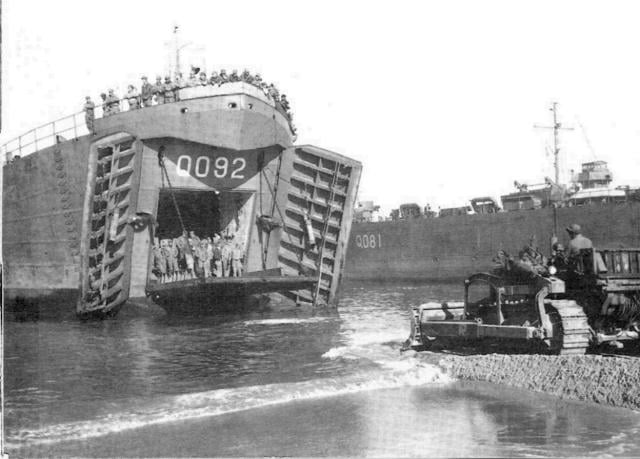
A SCAJAP LST at Inchon, Korea, 1950
SCAJAP’s repatriation operation was an extraordinary logistical achievement that played a significant role in the postwar recovery of Asia. After completion of the operation, SCAJAP ships would soon be called upon to transport men and equipment to Korea, providing crucial support in the amphibious operations at Inchon and Wonsan.
The signing of the Treaty of San Francisco on 8 September 1951 meant that Japanese ships could again fly the rising sun and operate under policies developed by the Japanese government. On 1 April 1952, SCAJAP was dissolved. Many Japanese-crewed ships remained in the service of Military Sea Transportation Services, drawing the ire of U.S. maritime unions, which charged that the practice was depriving Americans of jobs.
Info from: U.S. Naval Institute
##############################################################################
Military Humor –
##############################################################################
Farewell Salutes –
John Burson – Atlanta, GA; US Army, WWII, ETO, Bronze Star
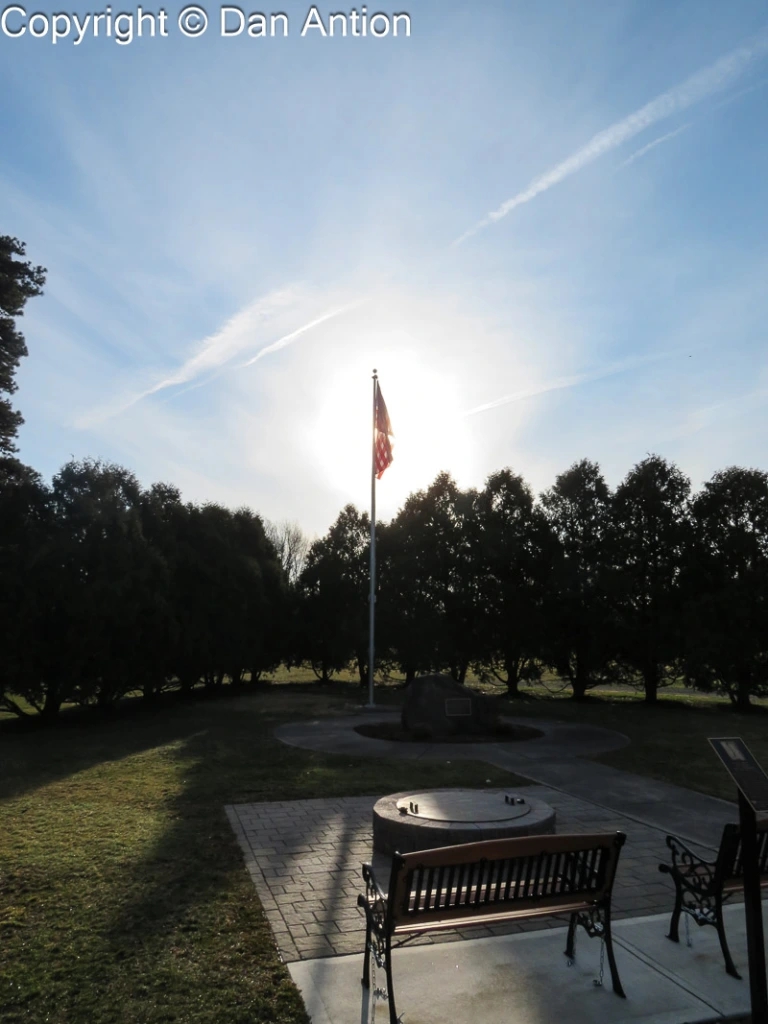
Old Glory, courtesy of Dan Antion
Dan Corson – Middletown, OH; US Army Air Corps, WWII, ETO, Lt., 401 BS/91BG/ *th Air Force, B-17 co-pilot, KIA (FRA)
Robert Cross (100) – Yorkton, CAN; RC Air Force, WWII, ETO, mechanic
Charles Crumlett – Streamwood, IL; US Air Force, SSgt., weapons load chief, 90th Fighter Generation Squadron, KWS (Alaska)
Roland A. Hall – Hurricane, UT; US Army Air Corps, WWII, PTO, 188/11th Airborne Division, Bronze Star
Richard J. Kasten – Kalamazoo, MI; US Army Air Corps, WWII, ETO, 1stLt., B-24 navigator, 68BS/44BG, KIA (FRA)
Matthew Langianese (103) – Moab, UT; US Army, WWII, ETO / Korea
Gerald W. Miller Vienna, VA; US Army, WWII, cartographer / US Navy, Korea
Ira “Frank” Moseley (101) – Conyers, GA; US Army, WWII, ETO / US Air Force
William L. Reichow – Decorah, IA; US Army, Sgt., 11th Airborne Division
Leroy J. Schoenemann (101) – Lyons, TX; US Army Air Corps, WWII, PTO, pilot, 64th Troop Carrier Wing
Brooks Winfield – San Rafael, CA; US Navy, WWII, PTO, Radioman, USS Oklahoma, KIA (Pearl Harbor, HI)
##############################################################################
##############################################################################

The History of V-Mail
Jeanne, who pens the excellent blog, “Everyone Has A Story” has this historical and interesting article from WWII…
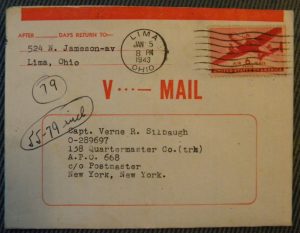
Joy Neal Kidney also did a post on V-Mail…
Admiral Chester W. Nimitz

“Our Navy” mag, 1 September 1946
Chester W. Nimitz : “Every Man’s Admiral”
(excerpts from “OUR NAVY” magazine, 1 September 1946)
He hailed from Fredericksburg, Texas, with a sea-faring family history. It seemed natural he would choose a Navy career, but in high school, his friends made plans for the Army. Chester decided he would compete with them for West Point.
When Nimitz became eligible to take the exam, he learned there were no more appointments available in his district, except for Annapolis. The winner of a competitive examination would land him that assignment. He entered in 1901 with Royal Ingersoll and William F. Halsey, Jr.
In his first year, he showed up at the boat dock, his 150 pounds barely filling his gym suit, and tried to get a place on the boat crew. The coach thought he was a bit small, but Nimitz said, “Give me a chance.” He got that chance and became the stroke oar in the 4th crew. They did so well, the Texan was promoted to the 3rd crew that consequently kept winning. Out-weighed by 35lbs., Chester would stroke the seven men in the first boat.
At 23-years old at the Asiatic Station, he impressed his superiors as an officer fit for submarine service. With his executive abilities, remarkable memory and exceptional patience, he arrived at the 1st Submarine Flotilla for his training.
The first sub Nimitz took command of was only the second one accepted by the Navy, the Plunger. Not even named for a fish, he called it “a cross between a Jules Verne fantasy and a whale.” He then proceeded to other classes of underwater craft.
One day in March 1912, while on the Skipjack, W.J. Walsh F2c was washed overboard. He couldn’t swim. Nimitz was the first to dive into the water and reach him before he went under, as they were both being carried away in the tide. This high character and confidence his men felt here, followed Chester Nimitz through all his commands.
In WWI, he served as Chief of Staff to Admiral Samuel S. Robinson, commander of the U.S. Submarine Forces. Because of his rank, he soon found himself in the surface fleet and he continued to climb.
When Nimitz arrived on the still smoldering Pearl Harbor to take over command of the Pacific Fleet, the CinCPac staff that had served under Admiral Kimmel nervously presumed the ever-efficient Nimitz to hand them transfer orders. Instead, he said, “I did not come here to mete out punishment. I know what you men are expecting me to say. I should be honored to have the entire staff stay with me and work until victory is ours.”
He proved he could pick out top commanders by choosing Spruance to take over Halsey’s ailing Task Force. and Comdr. Eugene Fluckey, also an ex-skipper of the submarine Barb, for his personal aide. From there we know of the exploits of Admiral Chester W. Nimitz during WWII.
For a man who had no more than the average youth’s advantages, I believe we can all agree he had done quite well. Fleet Admiral Nimitz passed away 20 February 1966, 4 days before his 81st birthday.
This magazine was supplied by Jeanne Salaco, blog “everyone has a story to tell”. Thank you once again, Jeanne!
#############################################################################
Military Humor –


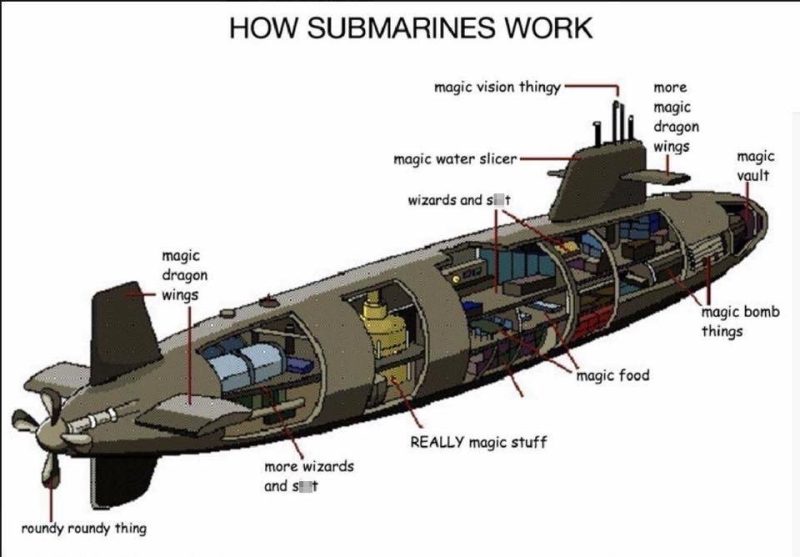
submarine magic – CLICK ON TO ENLARGE AND READ
##############################################################################
Farewell Salutes –
Richard Berky – Bluffton, OH; US Army, WWII, ETO
William O. Chase – Sacramento, CA; US Army, Korea

Honor Gracefully
John E. Deist III – Sterling, KS; US Army, Iraq, Sgt. Major (Ret. 21 y.), Bronze Star
Frank A. Kulow Jr. – Bailey, CO; US Coast Guard, WWII
Wrilshxer Mendoza – CA; US Air Force, Afghanistan, 82nd Airborne Division, (Ret. 22 y.)
I.G. Nelson – Plymouth, IA; US Army Air Corps, Japanese Occupation, 11th Airborne Division
Robert Oxman – Natick, MA; US Army Air Corps, WWII
Amelia Pagel – Temple, TX; Civilian, WWII, Lackland Air Force Base, aircraft repair
Robert T. Shultz – Arlington, VA; US Navy, Vietnam, Annapolis Class of ’50, Cmdr. (Ret. 26 y.), Bronze Star
Jack G. Thomas – Kalispell, MT; US Navy, Vietnam, fighter pilot / NV National Guard, Colonel
Marguerite Wood – NJ; Women’s Royal Naval Service, WWII
##########################################################################

MONDAY?! Uh-oh, are they looking at me now?
##############################################################################






 Pacific Paratrooper